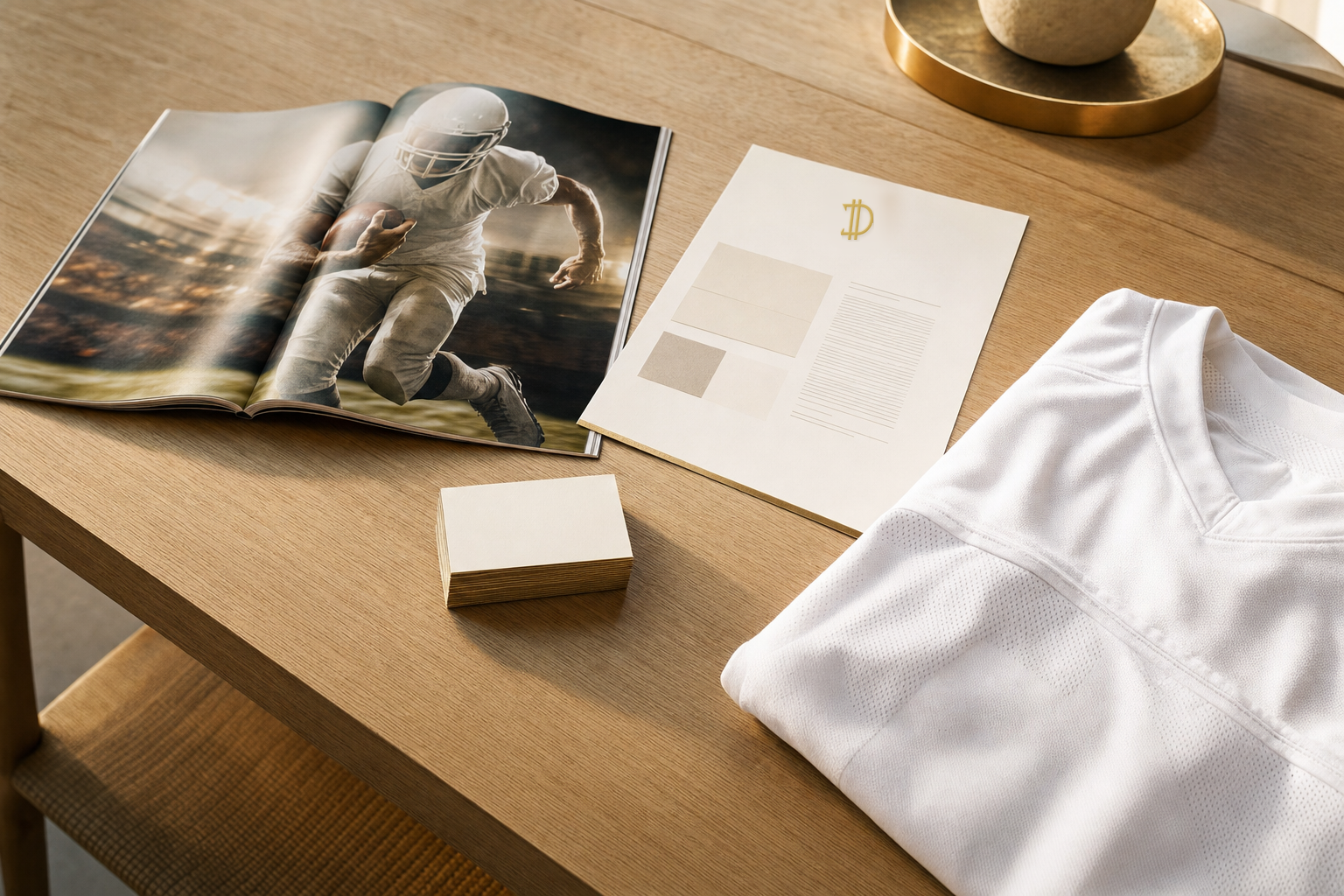
Start here, because everything else follows from it. The athlete is the brand. Not in a cynical way — in the plain legal and commercial sense. A name, a face, a signature and a reputation are property. They get licensed, printed, endorsed, infringed, diluted and sold in commerce, and every one of those words is a legal term with money attached to it. Jerseys change. Schools change. Coaching staffs change. The one asset that follows an athlete from ninth grade through a professional career is his own name.
Most families never hear it put that way. They hear that their son is a good football player who might get some deals. What is actually happening is that a business is being built, in public, by a sixteen-year-old, whether anybody is managing it or not. Every post is inventory. Every interview is positioning. The account is not a scrapbook — it is a storefront, and it is already open.
Which is why brands do not sign potential. They sign something a marketing team can use on Monday without doing any work: a name they can license, a mark they can print, a media kit with real numbers in it, and an athlete whose feed already looks like a partner rather than a highlight account.
We build that before we take anyone to market — identity and wordmark, partnership one-sheet, content system, and a trademark filing on the athlete’s own name so the value stays with the person who created it instead of leaking to whoever registered it first. Jaxon’s name is the subject of a pending U.S. trademark application for exactly this reason. Own the name early and everything built on top of it belongs to you. Leave it unprotected and somebody else can own a piece of who you are.